What is a Genome?
A genome is all the genetic material of a living thing. It is the entire set of hereditary instructions for building, running, and maintaining an organism, and passing life on to the next generation. The relation of Genome with DNA is given as under.
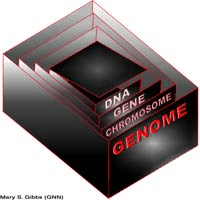
Each species on earth has its own distinctive Genome and even within species, it’s different.
What is genome sequencing?
Genome sequencing is like “decoding,” but a sequence is still very much in code. In a sense, a genome sequence is simply a very long string of letters in a mysterious language.
So sequencing the genome doesn’t immediately lay open the genetic secrets of an entire species. Even with a rough draft of the human genome sequence in hand, much work remains to be done. Scientists still have to translate those strings of letters into an understanding of how the genome works: what the various genes that make up the genome do, how different genes are related, and how the various parts of the genome are coordinated.
What is Genome Mapping?
A genome map helps scientists navigate around the genome. Like road maps and other familiar maps, a genome map is a set of landmarks that tells people where they are and helps them get where they want to go. Often, genome maps are used to help scientists find new genes and the genes due to which the disease are passed to generations.
What does a genome map look like?
Most everyday maps have length and width, latitude and longitude, like the world around us. But a genome map is one-dimensional—it is linear, like the DNA molecules that make up the genome itself. A genome map looks like a straight line with landmarks noted at irregular intervals along it, much like the towns along the map of a highway. The landmarks are usually inscrutable combinations of letters and numbers that stand for genes or other features—for example, D14S72, GATA-P7042, and so on.
What is the difference between a genome map and a genome sequence?
Both are portraits of a genome, but a genome map is less detailed than a genome sequence. A sequence spells out the order of every DNA base in the genome, while a map simply identifies a series of landmarks in the genome. But both are independent of each other.
In other cases, the landmarks on a map are DNA sequences, and mapping is the cousin of sequencing. For example, consider the following sequence:

A map of that sequence might look like this:

In general, particularly for humans and other species with large genomes, creating a reasonably comprehensive genome map is quicker and cheaper than sequencing the entire genome. Simply put, mapping involves less information to collect and organize than sequencing does.On this map, GCC is one landmark; CCCC is another. In the corresponding sequence, each base is a landmark. In other words, the sequence is simply the most detailed possible map.
Many animal “genome projects” now underway, such as those that focus on the dog and the horse, aim to map the genomes of these species. This will help scientists learn more about the biology of these species, without the enormous resources required when sequencing a genome.
By contrast, studying the human genome is actually a two-pronged effort, aiming at both a comprehensive genome map and a complete genome sequence. Advances in sequencing help the mapper move ahead, and advances in mapping help the sequencers make progress. These efforts are closely linked but not exactly the same thing.
Why map a genome if we are going to sequence it anyway?
One reason is that a map can actually help you sequence the genome. If you’re sequencing a genome with the clone-by-clone method, you need a map to decide where each clone belongs in the genome. The more detailed and correct your map, the easier it is to snap those pieces of a genomic jigsaw puzzle into place. For the most part, scientists can’t look at a sequence and see immediately which parts are genes or other interesting features, and which parts are “junk.” But the landmarks on a genome map give clues about where the important parts of the genome sequence can be found.
What are genome maps used for?
Genome maps help scientists find genes, particularly those involved in human disease. This process is much like a scientific game of hot and cold. Scientists study many families affected by a disease, tracing the inheritance of the disease and of specific genome landmarks through several generations. Landmarks that tend to be inherited along with the disease are likely to be located close to the disease gene and become “markers” for the gene in question.
Once they have identified a few such markers, scientists know the about location of the disease gene. In this way, they narrow down their search from the entire 3-billion-base-pair genome to a region of the genome a few million base pairs long.
Next, they look for genes in that part of the genome and study the genes one by one to learn which one is involved in the disease. For example, they might look for a gene that has a different sequence in people with the disease than it does in healthy people. Or they might look for a gene with a function that could be related to the disease.
In the future, researchers hope that more detailed genome maps will help them find genes faster, leading them straight to each gene the way you can look at a road map and find the sequence of streets that will take you exactly where you want to go. A more detailed map would also help scientists study complex human diseases and traits that involve many genes—for example, cancer, heart disease, and personality. Finally, genome maps enable scientists to compare the genomes of different species, yielding insights into the process of evolution.
What is the research going on in this area?
- Finding a cure to the disease like cancer etc.
- Increasing the human strength to machines
- Molecular Medicine
- Studying Human Evolution
- Biofuels and Energy Applications(Harnessing power of bacteria)
- Bioprocessing & Forensics etc.


 Pokharnatalks
Leave a reply to Kate Cardenas Cancel reply